
Our Blogs
Blogs
/
blog
The Difference Between Content Writing and Copywriting
Author
thenextline
Post Date


Shares
Why People Confuse Content Writing and Copywriting
Many business owners and startup teams use “content writing” and “copywriting” interchangeably — and that confusion often leads to wasted time, effort, and results.
Both play a key role in digital growth, but they serve different purposes.
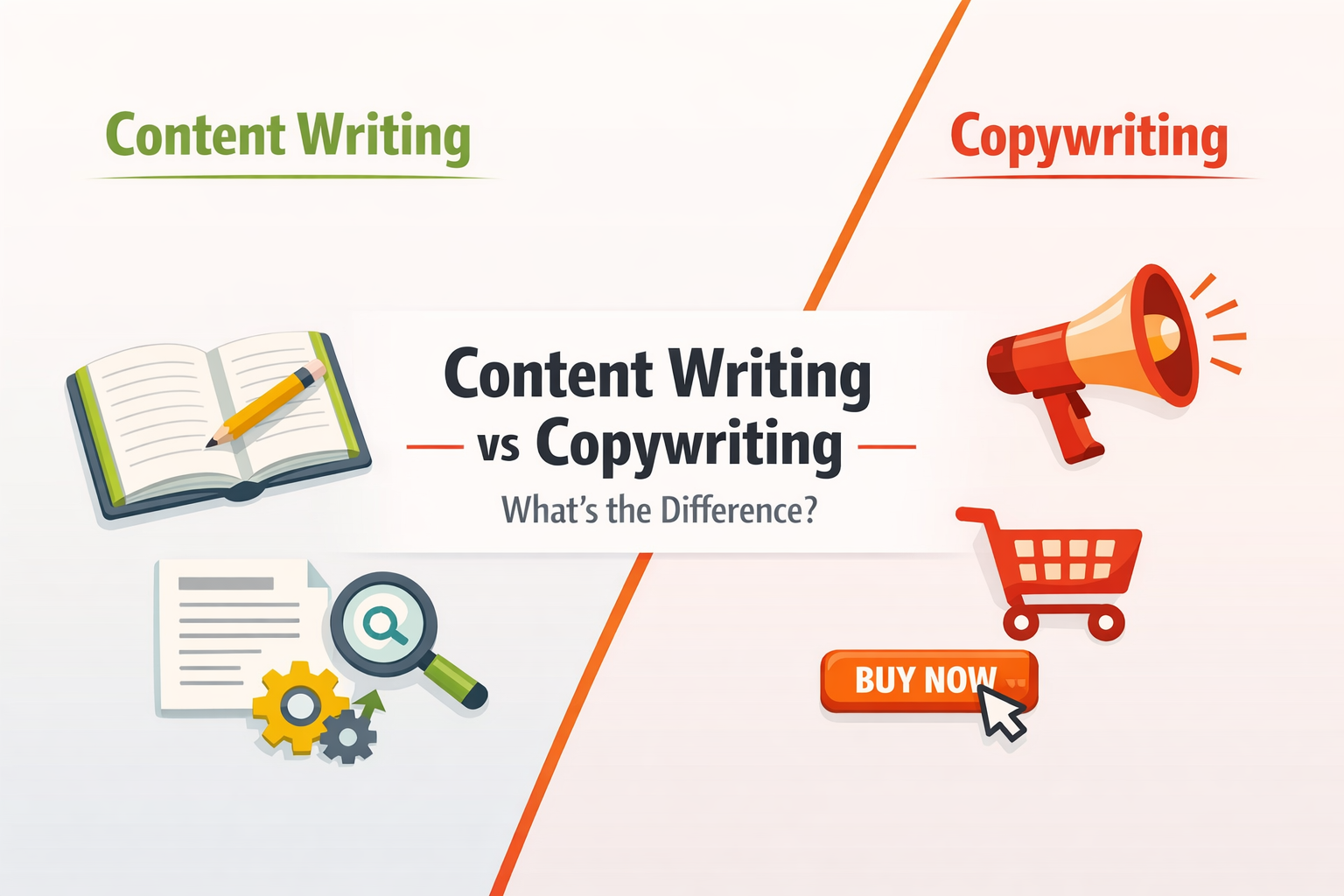
Content writing builds relationships. Copywriting drives action.
To grow effectively, you need to know when to inform and when to persuade — and how each supports your business goals.
Let’s break down the difference between content writing vs copywriting, with simple definitions, examples, and how they work together to attract and convert your audience.
What Is Content Writing?
Content writing is the process of creating educational, informative, or entertaining material that builds trust and long-term brand visibility.
It’s not about selling — it’s about helping.
When done right, content writing improves your SEO, attracts your ideal audience, and positions your brand as an expert.
Typical content writing examples include:
Blog posts and articles
Website content and service pages
Case studies or whitepapers
Email newsletters
Long-form educational guides
👉 If you’re new to the concept, check out our full guide on What Is Content Writing?
Well-crafted content is designed to engage your readers, answer their questions, and keep your brand top of mind.
What Is Copywriting?
Copywriting is the art of using words to sell or drive immediate action. It’s concise, persuasive, and emotional — designed to convert readers into customers or subscribers.
Where content writing nurtures, copywriting converts.
Common copywriting examples include:
Ad headlines and landing page copy
Product descriptions
Website banners or popups
Sales emails and campaigns
Social media ad captions
In short, copywriting turns interest into income.
Key Differences Between Content Writing and Copywriting
| Aspect | Content Writing | Copywriting |
|---|---|---|
| Goal | Educate, inform, and build trust | Persuade and sell |
| Tone | Helpful, informative, storytelling | Direct, emotional, conversion-focused |
| Audience Intent | Information seekers, researchers | Buyers, decision-makers |
| Length | Usually long-form (blogs, articles) | Short-form (ads, headlines, CTAs) |
| Metrics of Success | Engagement, SEO ranking, authority | Clicks, conversions, sales |
| Example | “10 Ways to Improve Your Website’s SEO” | “Get Found on Google — Book Your SEO Audit Today” |
Both are powerful, but they shine in different stages of the marketing funnel.
Content writing nurtures top- and mid-funnel audiences; copywriting captures those ready to take action.
Examples of Content Writing vs Copywriting
Content Writing Example
A blog titled “5 Ways Great Website Copy Improves Conversions” explains techniques, shares examples, and ends with subtle service recommendations.
→ Goal: Educate and build trust.
Copywriting Example
A landing page headline that reads:
“Convert More Visitors Into Customers — Upgrade Your Website Copy Today.”
→ Goal: Persuade and drive sign-ups or sales.
Both serve the same business, but with different intentions. One earns trust; the other earns revenue.
Which One Does Your Business Need?
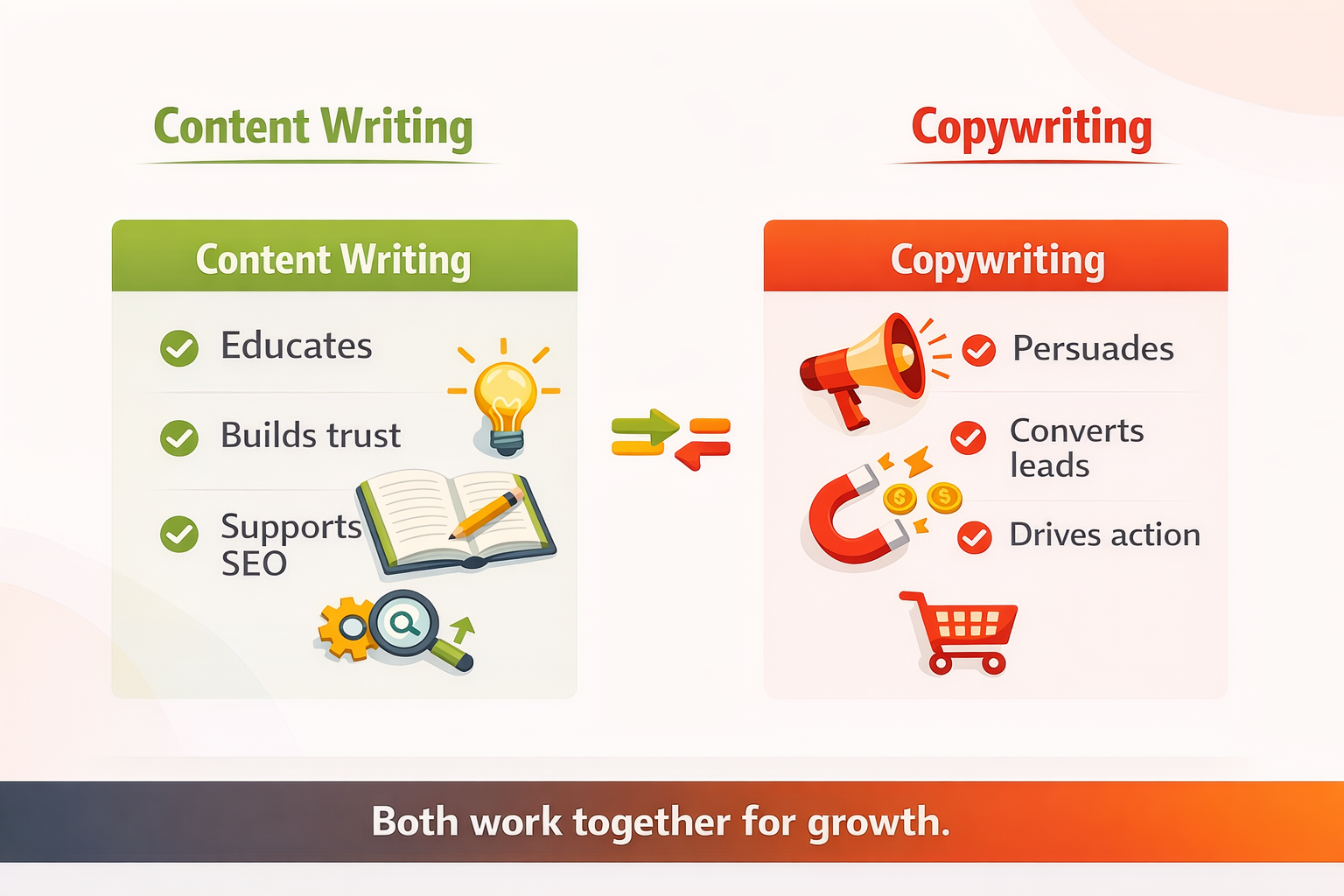
The short answer: you need both.
If your goal is long-term visibility and brand awareness — invest in content writing for SEO. It helps attract organic traffic and position your business as an authority.
If your goal is immediate conversions — invest in sales copywriting for your landing pages, ads, and emails. It motivates people to act.
Together, they form a full-funnel marketing strategy:
Content writing attracts leads.
Copywriting converts them.
Startups and small businesses that blend both see stronger, more sustainable growth over time.
Content Writing, Copywriting & SEO: How They Work Together
Content writing supports SEO by giving your website consistent, keyword-rich material that search engines can rank.
Copywriting complements that by turning SEO traffic into leads and customers.
Here’s how the process works:
Content writing builds visibility through optimized blog posts, guides, and pages.
SEO ensures the right people find your content.
Copywriting converts that traffic into measurable results — sales, sign-ups, or inquiries.
If you’re investing in digital growth, combining website content writing, SEO content writing, and professional content writing services ensures that every piece of writing supports your funnel — from discovery to conversion.
Writing That Builds and Writing That Sells
The difference between content writing and copywriting isn’t about better or worse — it’s about purpose.
Content writing connects; copywriting converts.
When you use both strategically, you create a seamless customer journey — from awareness to purchase.
If you’re ready to strengthen your voice, visibility, and conversion rate, consider partnering with professional content writing services that bring both skills together to help your brand grow faster and smarter.
Frequently Asked Question
What’s the main difference between content writing and copywriting?
Can one person do both content writing and copywriting?
Which is better for SEO — content writing or copywriting?
What are examples of copywriting?
How do I know which my business needs first?
Related Blogs
Have thoughts or questions about this topic?
Share your perspective below — we’d love to hear your insights and continue the conversation.