
Our Blogs
Blogs
/
How Blogs Help SEO: Why Every Business Needs a Blogging Strategy in 2026
How Blogs Help SEO: Why Every Business Needs a Blogging Strategy in 2026
Author
thenextline
Post Date
20, Jan 2026


Shares
How Blogs Actually Help SEO
You’ve heard it before — “blogging boosts SEO.”
But how, exactly?
For startups and small businesses, understanding the connection between blogging and SEO can be a game-changer. A well-written blog isn’t just an article — it’s an SEO asset that helps your business get discovered, build authority, and attract the right audience.
Blogging gives search engines more opportunities to find, index, and rank your site — turning your expertise into visibility.
In this guide, you’ll learn how blogs help SEO, the key benefits of blogging for SEO, and how to structure your posts for lasting results.
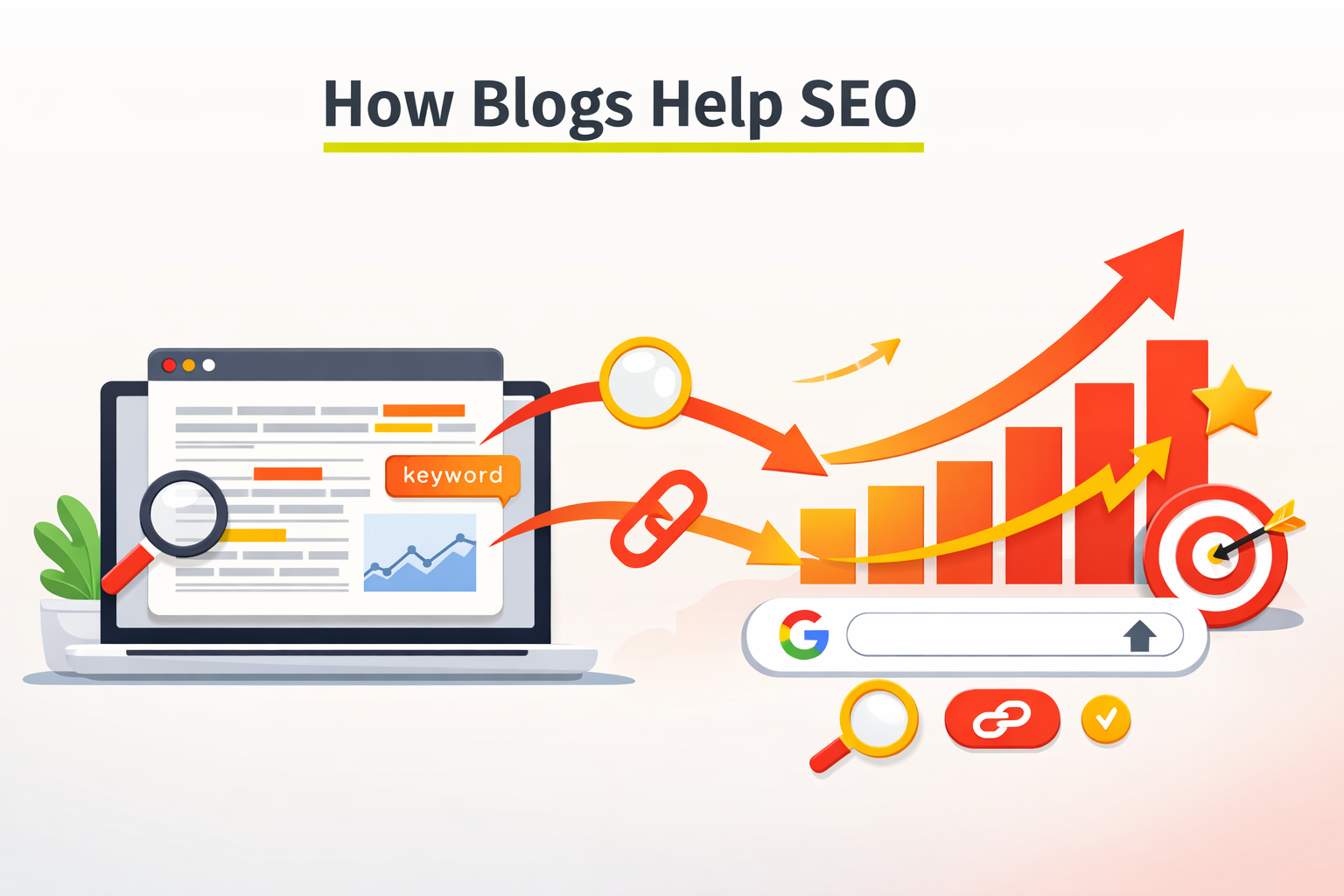
How Blogging Supports SEO
At its core, SEO (Search Engine Optimization) is about helping search engines understand your website — and showing users the most relevant results.
Every time you publish a blog post, you:
Add new pages for Google to index.
Target fresh keywords your audience is searching for.
Build internal links that strengthen your site structure.
Give users valuable content that keeps them on your page longer.
Each blog post acts like a signal that says, “Hey Google, this website is active, relevant, and authoritative.”
That’s why consistent SEO blog writing is one of the most effective ways to grow organic traffic over time — especially for startups and small businesses with limited ad budgets.
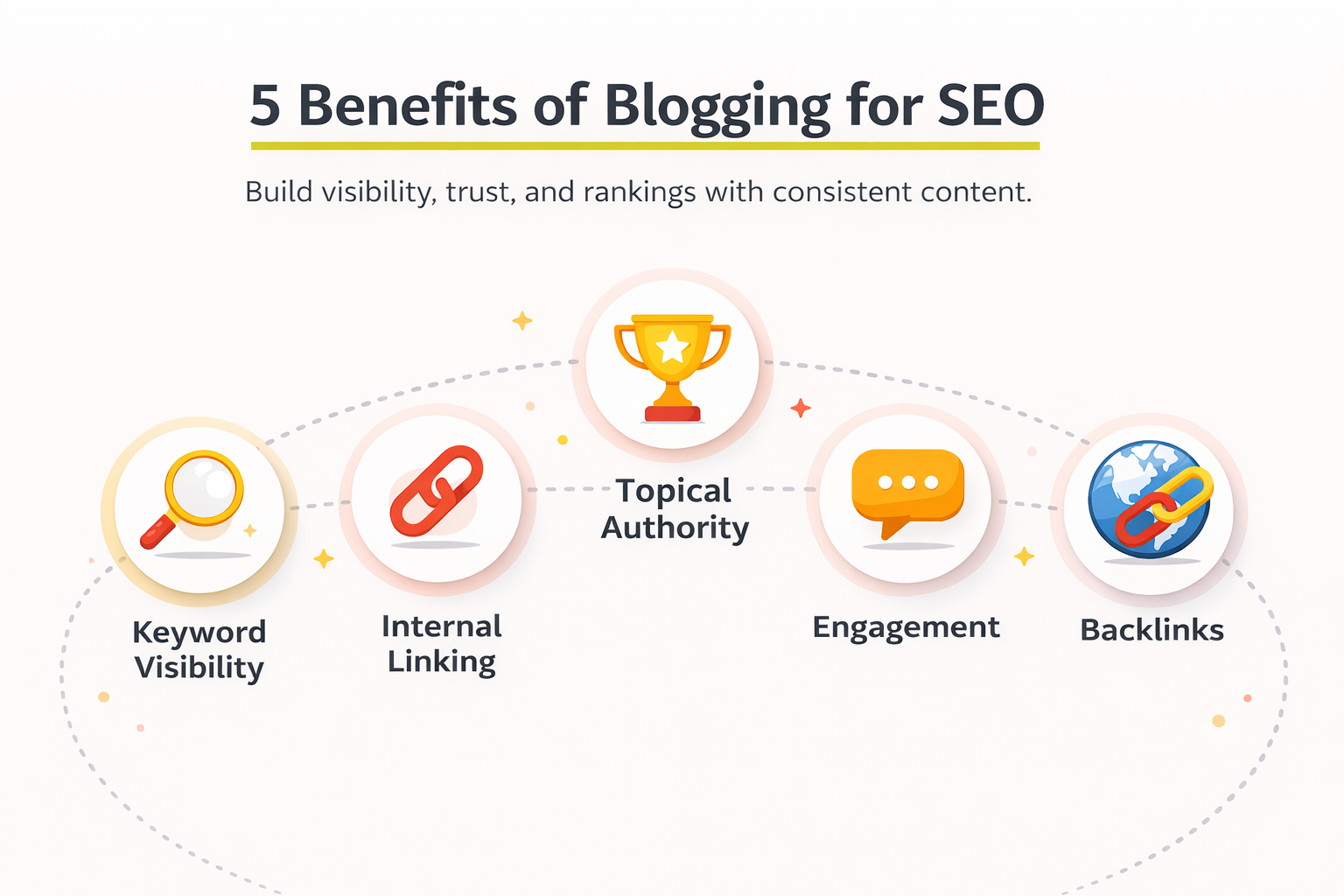
Key Benefits of Blogging for SEO
1. Boosts Keyword Visibility
Each blog post lets you target new keywords your audience searches for — including long-tail and question-based phrases. Over time, this builds a web of searchable content that boosts overall site visibility.
2. Improves Internal Linking
Blogs give you natural opportunities to link to your other pages — improving navigation and helping search engines understand your site’s hierarchy.
3. Builds Topical Authority
The more valuable, consistent content you publish around a topic, the more Google recognizes your site as a trusted resource. That’s how you establish authority within your niche.
4. Increases User Engagement
Engaging blog content keeps visitors on your site longer and encourages them to explore more pages — both of which are positive SEO signals.
5. Generates Backlinks
High-quality, educational blogs attract backlinks from other websites — one of the strongest ranking factors for Google.
When all these benefits work together, blogging becomes more than a content habit — it becomes an SEO growth engine.
How Search Engines Use Blog Content
Search engines are built to deliver useful, relevant information.
When your blog content matches search intent, Google rewards it.
Here’s how your blogs help search engines do their job better:
Crawling: Bots scan your content to understand topics and structure.
Indexing: Relevant blogs are stored and tagged for future searches.
Ranking: When someone searches, Google selects the most relevant, high-quality result.
Consistent, optimized blog posts give Google more high-value material to work with — meaning your site can rank for a wider range of searches.
How Often Should You Blog for SEO?
One of the most common questions is:
“How often should you blog for SEO?”
There’s no one-size-fits-all answer — but consistency beats volume.
For most small businesses:
-
Posting 2–4 SEO-optimized blogs per month is ideal for steady growth.
-
If you’re building authority fast, aim for weekly content.
-
Focus on quality — one strong, optimized post outperforms five rushed ones.
The key is to publish on a predictable schedule so Google sees your site as active and dependable.
What Makes SEO-Friendly Blog Content
Writing a blog is easy. Writing one that ranks takes intention.
Here’s what defines effective blog content for SEO:
-
Keyword Strategy: Research what your audience searches for and naturally include those terms in your title, headings, and copy.
-
Clear Structure: Use short paragraphs, bullet points, and headings for readability.
-
Internal & External Links: Connect your blog to relevant pages within your site and link to credible external sources.
-
Optimized Meta Tags: Write descriptive, keyword-rich titles and meta descriptions.
-
User Intent Alignment: Focus on solving real problems, not just stuffing keywords.
These are the foundations of SEO blog writing — turning words into ranking opportunities.
Blogging Strategy for Long-Term SEO
The best blogging strategy for SEO focuses on sustainability.
It’s not about quick wins — it’s about compounding visibility over time.
To build a strong SEO content system:
-
Create topic clusters around your core services or products.
-
Plan posts that answer related search questions.
-
Keep your blogs updated with new data or examples.
-
Analyze which posts drive the most traffic and build on that success.
When you combine content marketing and SEO, you create a flywheel effect — every blog adds momentum to your brand’s online growth.
Blogging Is the Heart of SEO
Blogs are more than marketing content — they’re your brand’s long-term visibility engine.
They help search engines find you, audiences trust you, and your business grow organically.
When you invest in consistent SEO blog writing, you’re building an asset that compounds over time — one post at a time.
If you’re ready to develop a smarter blogging strategy for SEO, consider partnering with professional writers who understand both content and search intent — so your words work harder for your business.
Frequently Asked Question
How do blogs help SEO?
What are the main benefits of blogging for SEO?
How often should I blog for SEO?
Do short blogs or long blogs rank better?
Can I hire professionals to write SEO blogs?
Related Blogs
Have thoughts or questions about this topic?
Share your perspective below — we’d love to hear your insights and continue the conversation.